Are Dried Flower Arrangements Safe for Pet Birds?
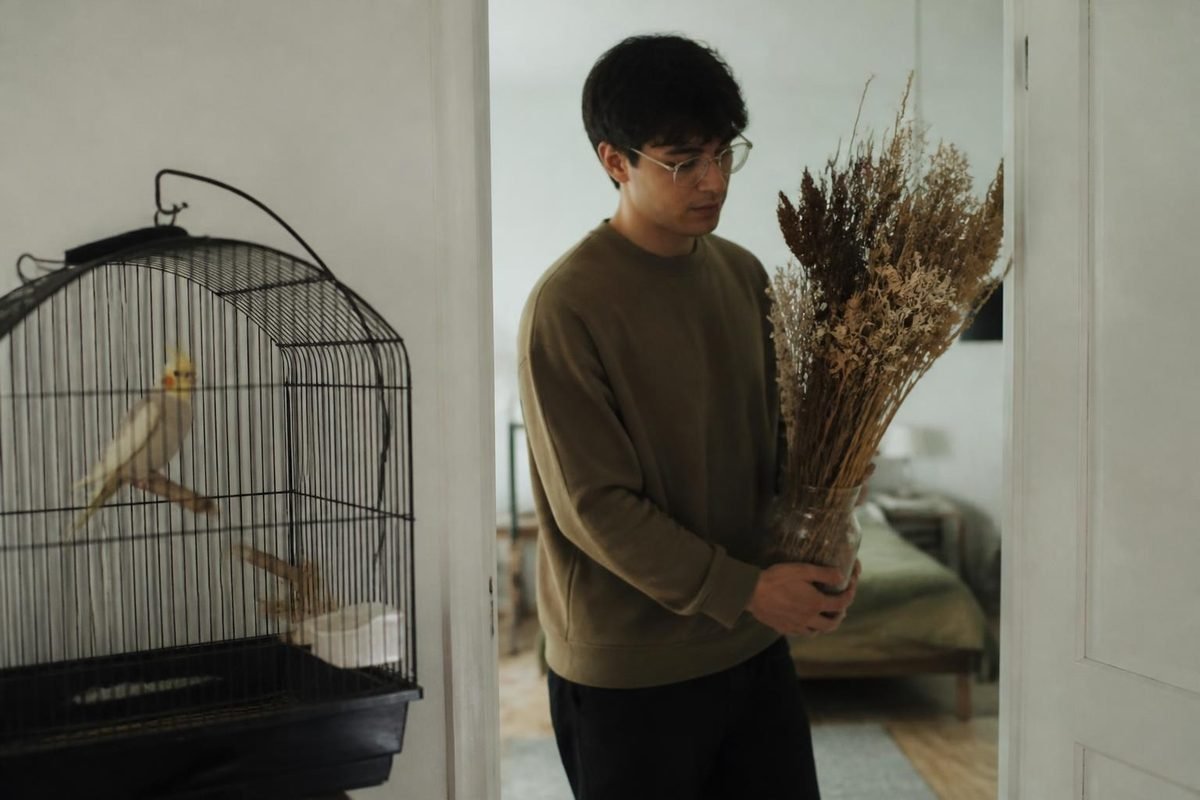
Dried flower arrangements are not a reliably safe decoration for pet birds. Birds may nibble the plants or breathe in dust and other particles, and an arrangement can also contain mold, sprays, or plants that are toxic to them.
Why dried flowers need caution
A vase on a table can look harmless from across the room. Up close, though, dried petals and leaves often shed tiny pieces when someone brushes past them or moves the vase. Birds have sensitive respiratory systems, so keeping dusty decorations away from their living space is a sensible precaution.
The plants themselves are another concern. Some flowers and foliage are toxic to birds, and drying does not make a toxic plant safe. An arrangement may also contain several kinds of plants, making it hard to identify every stem. Even if the flowers are recognizable, there may be leaves, seed heads, or decorative fillers mixed in.
Treatments are not always visible. Dried flowers may have been dyed, scented, or sprayed, and you may not know what was used. Moisture can also encourage mold, particularly if an arrangement has been stored in a damp place. Avoid handling a visibly moldy arrangement near your bird.
- Keep dried arrangements out of the bird's cage and away from perches.
- Place them in a separate room the bird cannot enter.
- Do not let a bird chew fallen petals, leaves, or stems.
- Keep scented sprays and other airborne products away from birds.
Making room for safer routines
Think about the path your bird takes during time outside the cage. A bouquet on a high shelf may still be within reach of a bird that flies or climbs. A separate room with a closed door offers a clearer boundary than simply moving the vase farther away.
Check the floor and nearby surfaces after moving or unpacking dried flowers. Small fragments can travel on a sleeve or fall from a table, where a curious bird might find them. Clean up loose material before bringing your bird into the area.
If you want plants or flowers where your bird spends time, ask an avian veterinarian about the particular species first. Identify each plant rather than assuming that everything in a mixed bouquet is safe. Keep in mind that a plant considered safe to touch may still have been treated with products you would not want your bird to ingest.
Common questions about birds and dried flowers
Can my bird chew an untreated dried flower?
Do not offer it unless an avian veterinarian has confirmed that the specific plant is suitable. Untreated does not mean nontoxic, and an unknown stem may be difficult to identify accurately.
What if my bird nibbled a dried flower?
Remove the bird from the arrangement and contact an avian veterinarian promptly. If possible, tell the vet the plant's name and any known treatments. Keep a sample or photo for identification, and do not try to make the bird vomit.
Is an arrangement safe if my bird cannot reach it?
Distance reduces the chance of chewing, but dust and airborne products remain concerns. Keeping the arrangement in a separate room your bird cannot enter is the more cautious choice.
More to read: making cut flowers last